

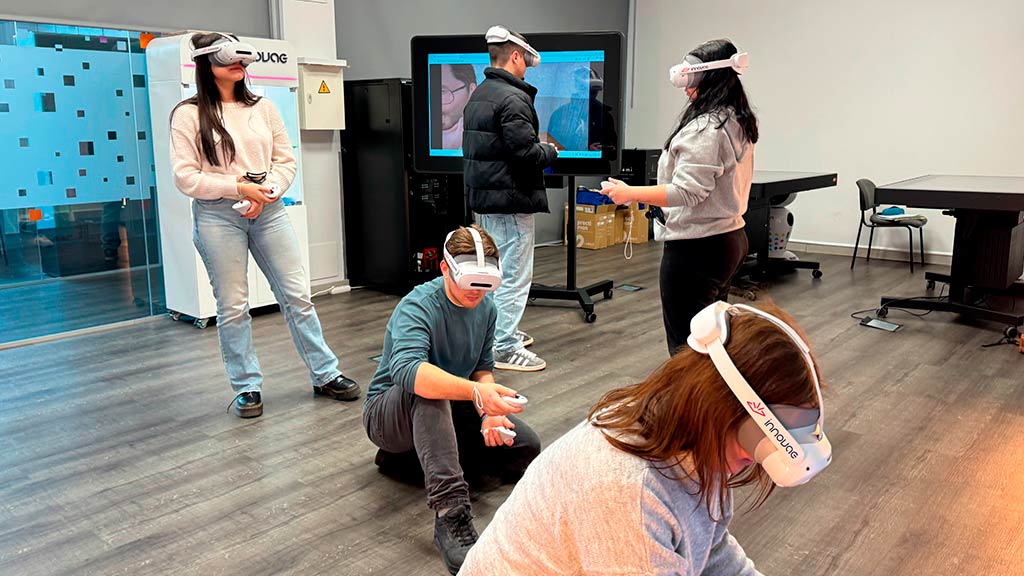
Bringing innovative technology into a Vocational Education and Training centre is only the first step. The real challenge lies in ensuring that teachers are confident using it, that it is effectively integrated into training programmes, and that it becomes part of the centre’s everyday teaching practices.
This is one of the key issues addressed in the study The Vocational Education and Training System and Innovation in Spain, presented by Fundación CaixaBank Dualiza and Fundación Cotec. Its findings highlight a key point: innovation cannot be sustained through technology, funding, or good intentions alone. It requires leadership, organisation, time, teacher training, and continuous support.
From the intention to Innovate to making innovation happen
The report highlights a gradual shift in recent years from isolated innovation initiatives towards a more applied approach to innovation. However, one-off actions continue to outweigh comprehensive innovation policies, resulting in a landscape that remains uneven and fragmented.
For many centres, the challenge is turning strategic intent into innovation that is embedded in everyday operations. While public policy, funding, and the wider business environment all play a role, the report identifies several key drivers within the centres themselves.
Teacher commitment ranks first, with 61% of centres identifying it as a priority factor for encouraging innovation. Leadership from management teams follows at 53%. Dedicated innovation roles, previous experience, strategy, and internal organisation also play an important part.
These elements are closely connected. Even highly committed teachers need strong leadership to provide direction, define responsibilities, and ensure that innovation becomes a structured process rather than an initiative dependent on individual motivation.
Time is another essential ingredient. Innovation needs to be understood, tested, refined, and gradually adopted. While 80% of centres incorporate innovation into their educational plans, only 64% have a dedicated person or team responsible for it. Furthermore, 56% of centres say that teachers never, rarely, or only occasionally have dedicated hours to work on innovation projects.
Implementation cannot rely solely on teachers taking on additional responsibilities. It requires time and space to explore new tools, experiment with them, and address the questions that arise before bringing them into the classroom.
Innovation starts from within the centre
Calasanz Lanbide Ikastegia’s experience implementing Virtual Reality is a clear example of this approach: identifying the barriers to innovation and creating the conditions required to sustain it over time.
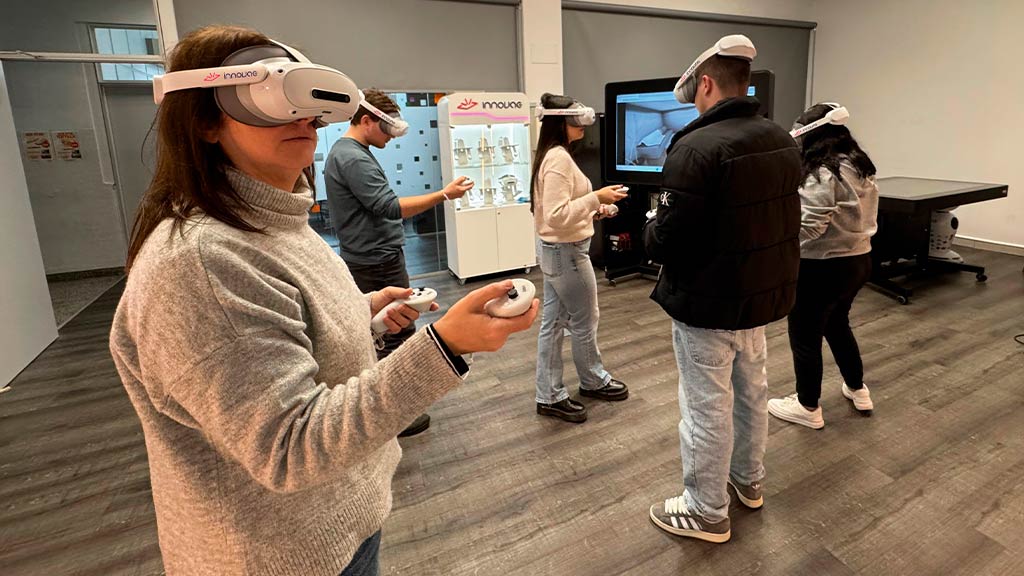
According to Raúl Setién Trueba, Director of Innovation, focusing on technological novelty without addressing curricular integration and teacher support can reduce Virtual Reality to “isolated experiences, one-off demonstrations, or exceptional activities that fail to become part of everyday educational practice”
This is why Calasanz understood that “implementing Virtual Reality in the classroom is not simply about acquiring innovative technology”, but about “using it with purpose”.
The implementation was driven by an innovation team comprising teachers from different vocational disciplines. Following an initial technical training programme, team members became trainers and points of support for the wider teaching staff. In Setién’s words, “this peer-to-peer learning creates a very powerful multiplier effect”.
The objective was not to turn teachers into Virtual Reality experts, but to give them the confidence and pedagogical tools to use the technology effectively. This ensured that knowledge was shared across the teaching staff rather than concentrated in a few individuals, helping to secure the long-term continuity of the project.
Building confidence takes time
When introducing Virtual Reality, teachers’ concerns are not limited to learning how to operate the technology. They also extend to managing classroom dynamics, integrating the tool into existing teaching activities, and assessing learning within the virtual environment.
To address these concerns, Calasanz organised training sessions tailored to the modules within each vocational programme. The initial sessions were held without students, giving teachers the opportunity to become familiar with the virtual environment and experiment with the technology without the added pressure of managing a class.
While technical training provided the starting point, the focus gradually shifted towards pedagogy: which competences could be developed, how activities could be organised, and where the simulator could deliver genuine added value.
The innovation team also remained alongside teachers during their first sessions with students, “providing technical and pedagogical support”.
This enabled teachers to gradually move from experimenting with the technology to applying it in real classroom situations and eventually using it independently.
Confidence also grew by seeing colleagues’ experiences: “When a teacher sees that another colleague has successfully integrated Virtual Reality into their teaching, the initial barrier naturally begins to fade.”
From a one-off experience to a shared methodology
The report highlights that innovation becomes sustainable when it moves beyond isolated initiatives and is embedded into the centre’s strategy through permanent structures, clear plans, and dedicated roles to coordinate its development.
Simply introducing a new technology and providing initial training is not enough. Centres need to define how its use will scale, who will support teachers throughout the process, how knowledge and best practices will be shared, and how the technology will connect with the centre’s educational planning.
At Calasanz, this approach enabled the project to evolve beyond the initial focus on operating the devices. Once the implementation phase was consolidated, attention shifted towards using Virtual Reality as a means of developing professional competences.
As Setién concludes, educational innovation largely depends on having the right people around you and keeping people at the centre of the process: “When this happens, technology stops being the protagonist and becomes what it should really be: a tool at the service of student learning and the continuous improvement of teaching practice.”