

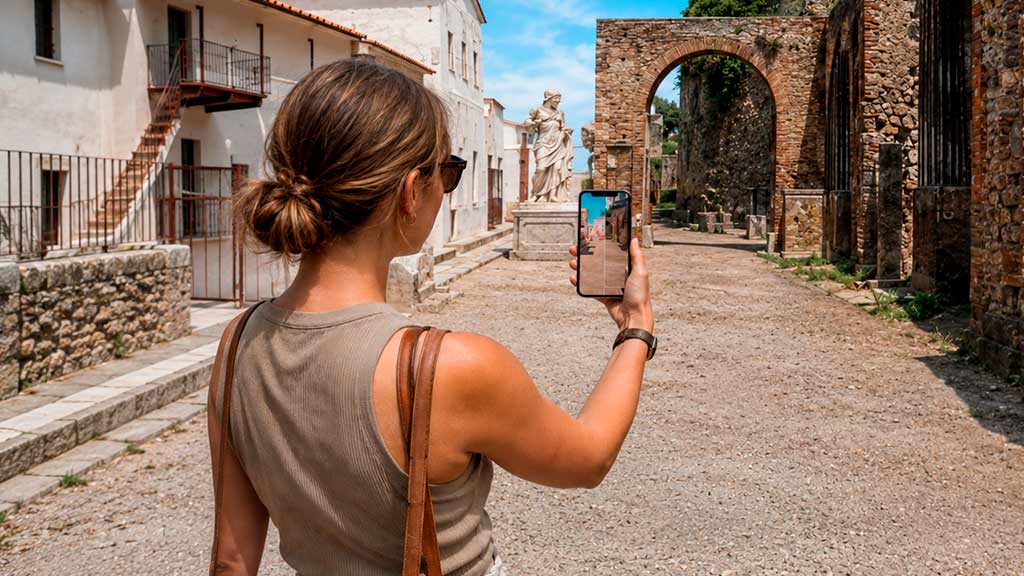
Cultural and archaeological heritage holds a unique power to connect people with the past but making sense of what you’re seeing isn’t always easy. Partially preserved ruins, delicate artifacts, and sites or landscapes shaped by centuries of history all call for tools that can bring their significance to light.
That’s where digital technology steps in, emerging as a powerful ally for reimagining how heritage is interpreted and shared. Virtual reality, augmented reality, 3D modeling, and interactive content are transforming visits into experiences that are more visual, more accessible, and easier to understand.
With cultural tourism on the rise, these innovations open the door to bringing history to broader audiences, diversifying what destinations have to offer, and sharpening their competitive edge.
Benefits of virtualizing cultural and archaeological heritage
One of the main benefits of applying digital tools to the cultural sector is improved interpretation. Virtual recreations, three-dimensional models, and interactive content make it possible to reconstruct historical periods, places, and events that would otherwise be difficult to imagine.
These solutions do more than provide information they help build a narrative. And narrative is essential to any cultural visit. When visitors better understand what they’re looking at, their interest, retention, and connection to the site all increase.
Accessibility is another key benefit. Virtualization brings spaces, artifacts, and tours closer to people who, for geographic, physical, or logistical reasons, may not be able to visit in person. Virtual tours, multimedia content, and digital experiences extend their reach, allowing more people to discover, study, and enjoy them.
These tools also make it easier to adapt content to different visitor profiles, offering multiple levels of detail, various languages, audiovisual materials, interactive games, and educational resources that enrich the visit and make it more inclusive.
Conservation is another compelling argument for innovation in the cultural sector. Digital replicas of objects, spaces, or archaeological structures allow their condition to be precisely documented, help preserve valuable information, and reduce the physical handling of fragile elements. In this way, these solutions serve not only to promote heritage but also to protect it.
There is also a positive impact on tourism sustainability. Digital resources can reduce reliance on printed materials, help better distribute visitor flows, and create less invasive experiences for the surrounding environment, an especially important factor in sensitive natural or archaeological sites.
Virtualan: Technology at the service of heritage
In this space, Virtualan, a company linked to the Innovae group, has established itself as a leading name in the virtualization of cultural and archaeological heritage. Its work focuses on developing digital solutions that combine historical accuracy, strong educational value, and enhanced user experience.
The company’s approach is built on a clear idea: leveraging immersive and interactive technology to showcase the value of historical sites, archaeological areas, natural settings, and heritage assets. Through digital recreation, these can be interpreted and experienced in ways that are both more accessible and more meaningful.
Two of its most recent projects illustrate particularly well the potential of these solutions within cultural tourism.
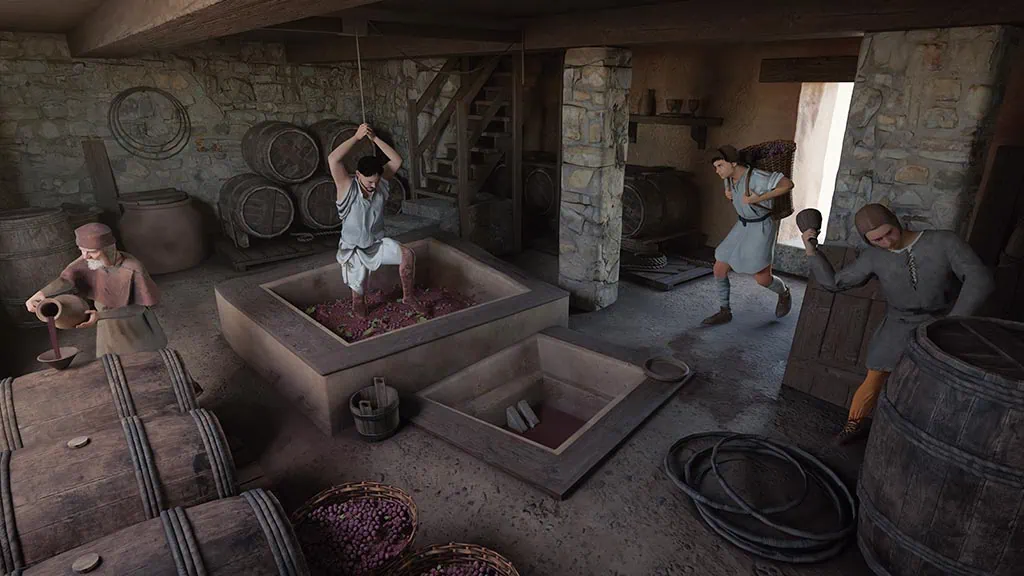
The first is the Virtual Heritage 3D project in Ribera de Navarra, backed by the Consorcio EDER. This project enabled the creation of 3D virtual reconstructions of several archaeological sites throughout the Ribera Alta and Baja areas of Navarra, aimed at helping people better understand the region’s historical and archaeological heritage while boosting its tourism offering.
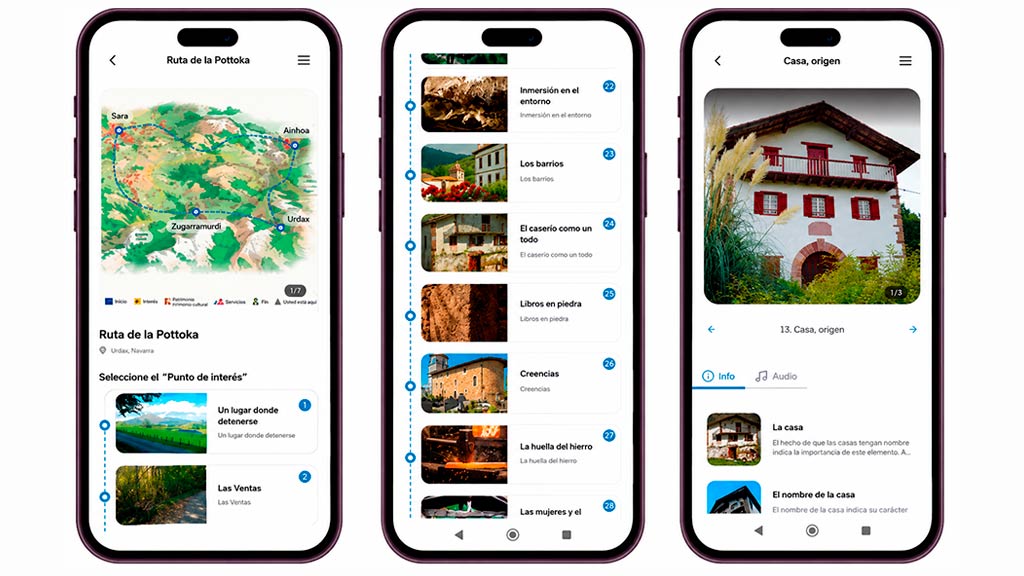
The second is a project developed in Zugarramurdi, focused on the Cave and the Pottoka Route. This initiative has updated how the town’s natural and cultural heritage is presented, using digital content that visitors can access straight from their mobile devices.
A new way of looking at the past
In a sector increasingly shaped by visitor experience, immersive and interactive technologies open the door to transforming how we engage with history. They help reconstruct what’s disappeared, explain what’s hidden, and bring knowledge to a broader, more diverse audience.
These tools allow cultural destinations to offer experiences that are more complete, more sustainable, and better suited to what today’s visitors expect while also helping preserve their legacy for generations to come.
The virtualization of cultural and archaeological heritage marks the start of a new chapter for historical outreach and cultural tourism. Looking back at the past through new technology isn’t about stepping away from history. It’s about finding new ways to understand it, share it, and keep it alive.