

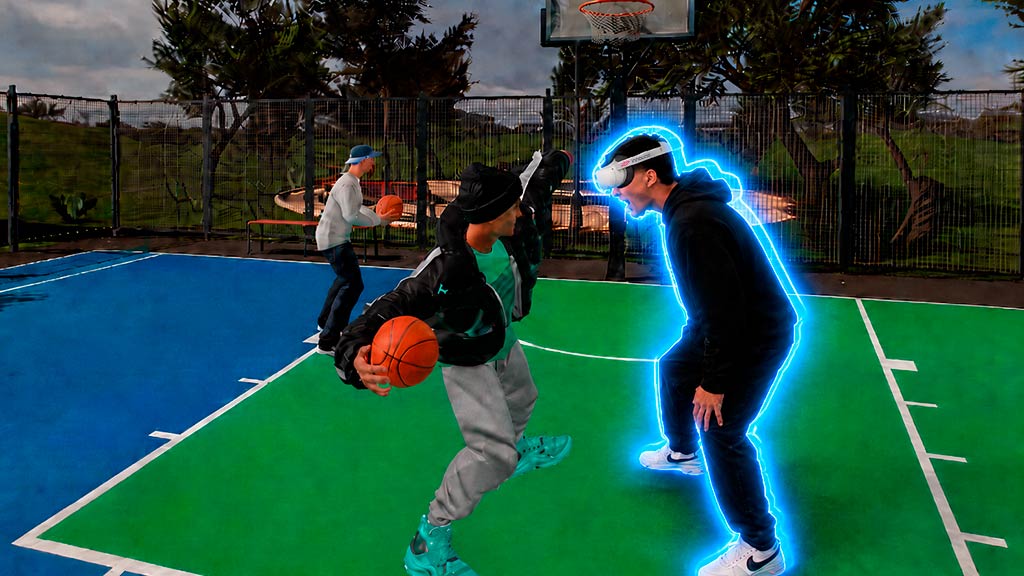
Virtual reality is far more than a tool for rehearsing procedures. It also serves as a tool for training self-control, but to do so, it must be capable of triggering genuine emotional responses that are measurable and useful for learning or therapeutic intervention.
This is especially relevant for young people who struggle to manage aggression, anger, or impulsivity. In these cases, explaining what to do in a conflict situation isn’t enough. They need to practice. To be exposed to it. To recognize the emotion as it surfaces and rehearse alternative responses in an environment where mistakes don’t have real consequences.
That’s precisely the starting point of the pilot study “Virtual reality to address aggressiveness and psychophysiological responses in youth”, developed by the Faculty of Education and Psychology at Universidad Francisco de Vitoria, the Department of Biological and Health Psychology at the Universidad Autónoma de Madrid, and the Association for Social Integration Management (GINSO).
The study examines GINSO-VR, a virtual reality simulator we developed to address aggression-related processes in young people. It’s the first VR-based therapy designed specifically to treat aggression and self-control in this population and its early findings point to something significant: virtual environments can produce measurable emotional, behavioral, and physiological responses.
And that’s one of the cornerstones of experiential learning: when an experience generates emotion, engagement goes up, attention sharpens, and what was lived is far more likely to be remembered.
A complex challenge: intervening in aggression in safe environments
Aggression in adolescence is a complex phenomenon. It doesn’t stem from a single factor, but from the interplay between emotions, cognitions, physiological responses, prior experiences, and social context. Classic studies such as Anderson and Bushman’s work on human aggression already pointed to how anger, the interpretation of others’ intentions, and physiological arousal all shape the way a person responds to a conflict situation.
In young people facing vulnerability, this complexity can run even deeper. The study notes that reactive aggression more impulsive in nature and linked to perceived threats is associated with difficulties in emotional self-regulation. For this reason, any effective intervention needs to work on multiple levels: emotional recognition, the interpretation of ambiguous situations, anger management, and decision-making.
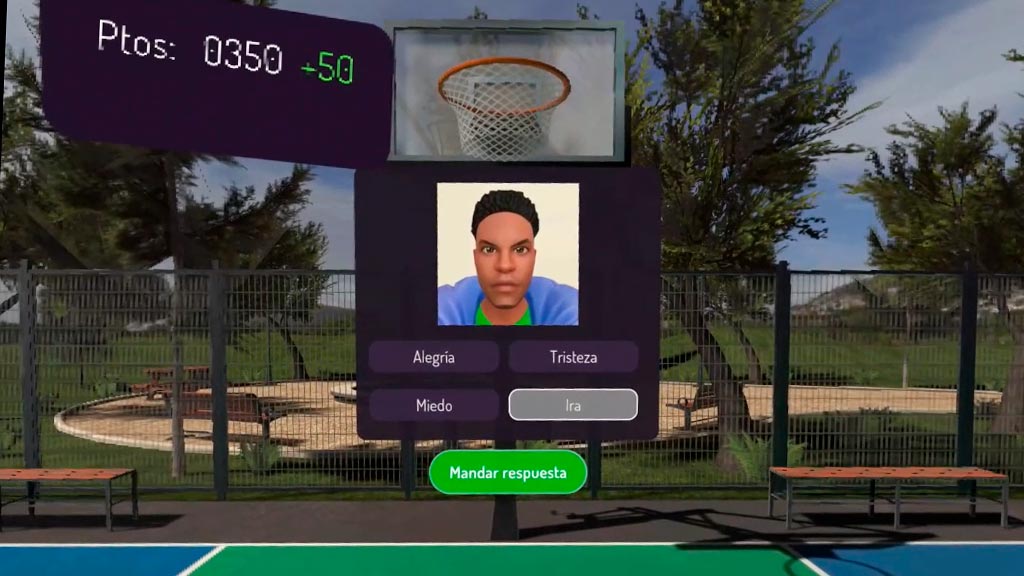
This is where virtual reality makes a real difference. Compared to more traditional approaches, it allows social situations to be recreated in an immersive, safe, and controlled way. The young person doesn’t imagine a scenario they live it. They interact with avatars, receive stimuli, make decisions, and experience an emotional response within a setting supervised by professionals.
That combination of realism, control, and oversight is one of the technology’s greatest strengths. The environment can be provocative, but it’s controlled. It can generate tension, but under supervision. It can trigger emotional responses, but within an intervention that has been deliberately designed with therapeutic goals in mind.
Emotion as a gateway to learning
One of the most interesting findings of the study is that participants showed an increase in anger state following the experience particularly after the more provocative scenarios.
This reinforces the value of the simulator: the virtual environment successfully triggered a realistic emotional response. In other words, users didn’t experience it as something neutral or purely visual they experienced it as a situation with genuine emotional impact.
This connects directly to a core idea in training, therapy, and experiential learning: for a person to truly internalize a response, they need to practice it in a meaningful context. Emotion acts as an anchor. It makes the experience more memorable, increases engagement, and allows work on responses that are closer to what would actually emerge in a real situation.
Measuring what's actually happening during the experience
Another standout feature of the study is the inclusion of psychophysiological variables. The intervention doesn’t simply ask participants how they feel before and after it also tracks indicators such as heart rate, heart rate variability, brain activity via EEG, and salivary biomarkers including cortisol, testosterone, and alpha-amylase.
In this regard, the results also show measurable physiological changes that corroborate the increase in anger following the experience.
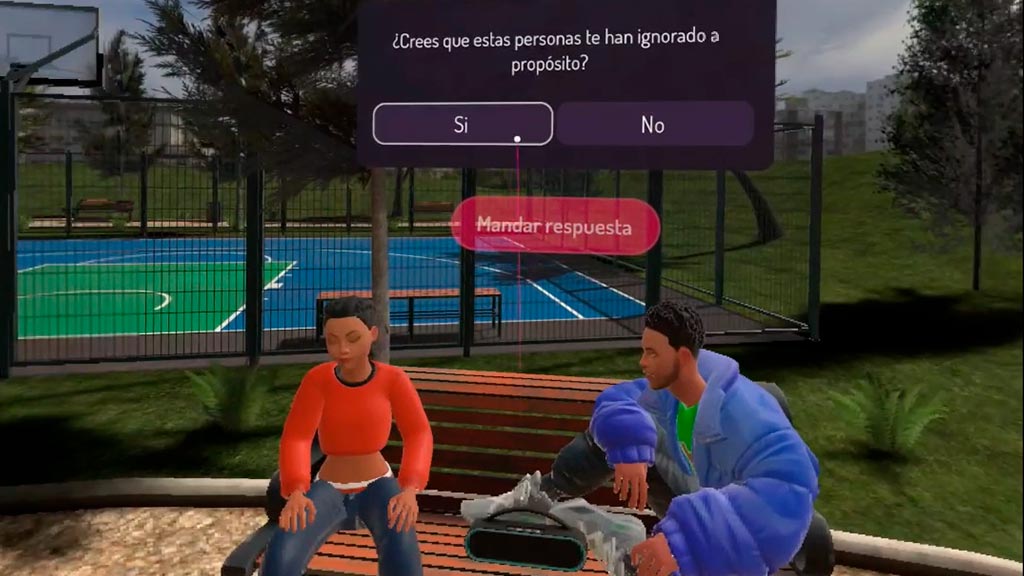
This opens up a highly relevant avenue for the future of personalized interventions. If it’s possible to monitor how each person responds during a session, it also becomes possible to tailor treatment to their individual emotional and physiological profile. Therapy stops being a fixed experience and becomes a dynamic process, one adjusted to the patient’s actual profile.
Technology in service of intervention
Ultimately, GINSO-VR makes it possible to recreate situations that are difficult to replicate in traditional therapy controlling stimuli, measuring responses, and tailoring the intervention to each individual participant. At the same time, it gives young people a space to practice skills they will need to apply in their daily lives: recognizing emotions, better interpreting others’ intentions, managing anger, and reducing impulsivity in decision-making.
The study’s early results reinforce the premise that virtual reality has genuine impact when it succeeds in connecting with emotion. Because when an experience is truly lived, it’s better remembered. And when it’s better remembered, it’s better learned.