

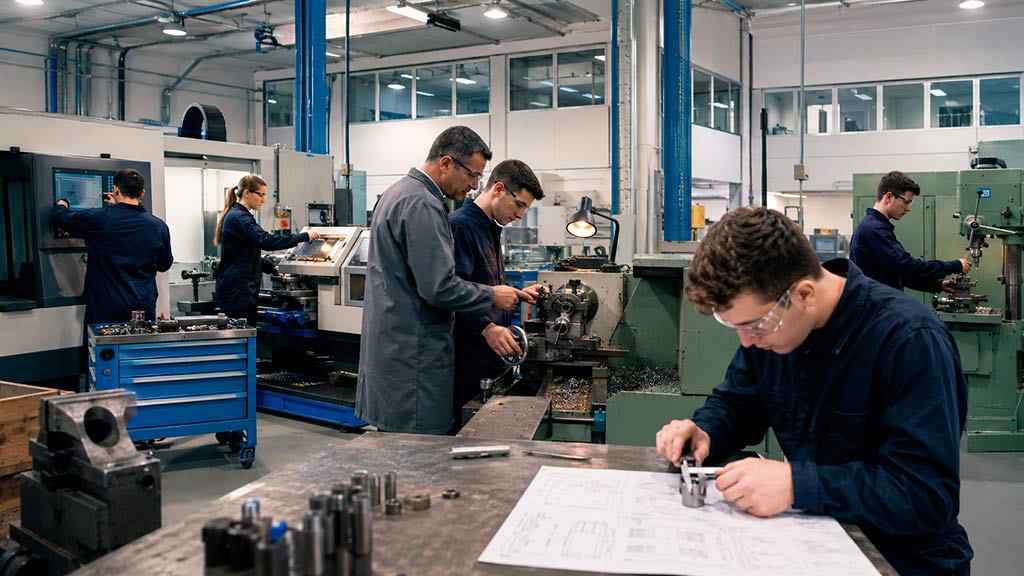
Choosing a path after completing compulsory education is one of the most important decisions students face. Personal interests, career aspirations, individual skills, and future job opportunities all play a role in shaping that decision. In recent years, Vocational Education and Training (VET) has steadily gained relevance as an increasingly popular option.
According to Randstad Research, the number of VET graduates in Spain has grown consistently over the last decades, increasing from around 150,000 graduates per year in 2005 to nearly a quarter of a million today.
So, what explains the growing appeal of Vocational Education and Training?
Vocational Education and Training: A direct pathway to employment
The growing demand for specialized technical talent is transforming the labor market. According to Randstad Research, Spain has created more than 2.5 million highly qualified jobs in recent years, increasing the need for professionals with practical and industry-oriented skills.
This is where Vocational Education and Training stands out. Its combination of theoretical learning, hands-on practice, and close connection with companies, makes it especially effective in preparing students for real workplace environments.
This strong connection with the professional world translates directly into employability. Data from the Madrid Chamber of Commerce shows that between 73% and 79.5% of students who complete VET programmes successfully are employed, compared to 66% of university graduates. These figures highlight how VET has established itself as an educational pathway capable of responding quickly and effectively to the needs of industry.
Beyond employability, students are increasingly attracted by a more practical and engaging way of learning. Being able to apply knowledge in real contexts from the early stages of training helps build technical competencies while also boosting confidence, motivation, and involvement throughout the educational journey.
Dual Vocational Training and hands-on learning: Key to developing skilled talent
The growth of Dual Vocational Education and Training has reinforced the practical nature of VET even further. By increasing training hours within professional environments and strengthening collaboration between schools and companies, students gain earlier exposure to the realities of the workplace.
This allows them to become familiar with real procedures, tools, and workflows before joining the labour market, helping build professional profiles that are better aligned with industry needs.
But the strength of VET goes beyond hands-on learning. Its real value lies in its continuous connection with companies and industries, enabling training programmes and methodologies to evolve alongside the changing demands of the labour market.
Virtual Reality gringing workplace environments into the classroom
For Vocational Education and Training to remain closely connected to industry, students need access to learning experiences that reflect real professional environments before entering the workplace itself. This is where immersive technologies are making a real difference.
Among these technologies, virtual reality simulators have emerged as one of the most promising tools for technical training.
But technology alone is not enough. To create truly valuable learning experiences, simulators must be developed alongside teachers and industry professionals who understand the real procedures, tools, and challenges students will encounter in their future careers.
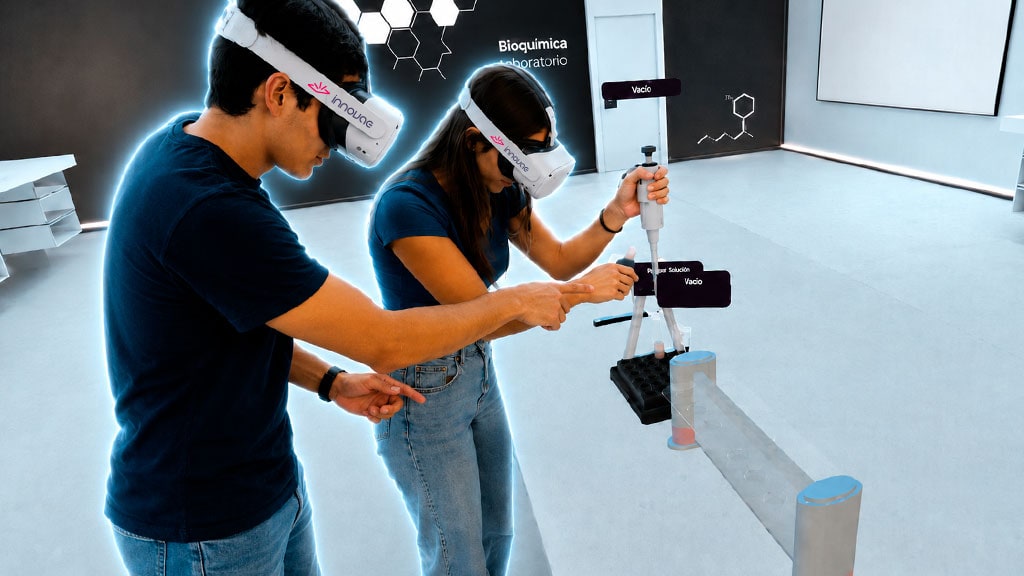
When implemented effectively, virtual reality enables students to practise complex operations safely, without relying on costly machinery or consuming physical resources. It also allows procedures to be repeated as many times as necessary, strengthening technical competencies while improving confidence and autonomy.
Standardisation and digitalisation of technical training
One of the key challenges in technical education is ensuring that procedures are carried out correctly and in a standardised way. While access to real machinery adds significant value, it is not always enough to guarantee that students fully internalise each process, follow established protocols, or correctly apply safety measures.
This is where process digitalisation tools are becoming increasingly important. These solutions help structure operations in a clear, step-by-step format, guiding students through each task in a way that aligns with real workplace standards.
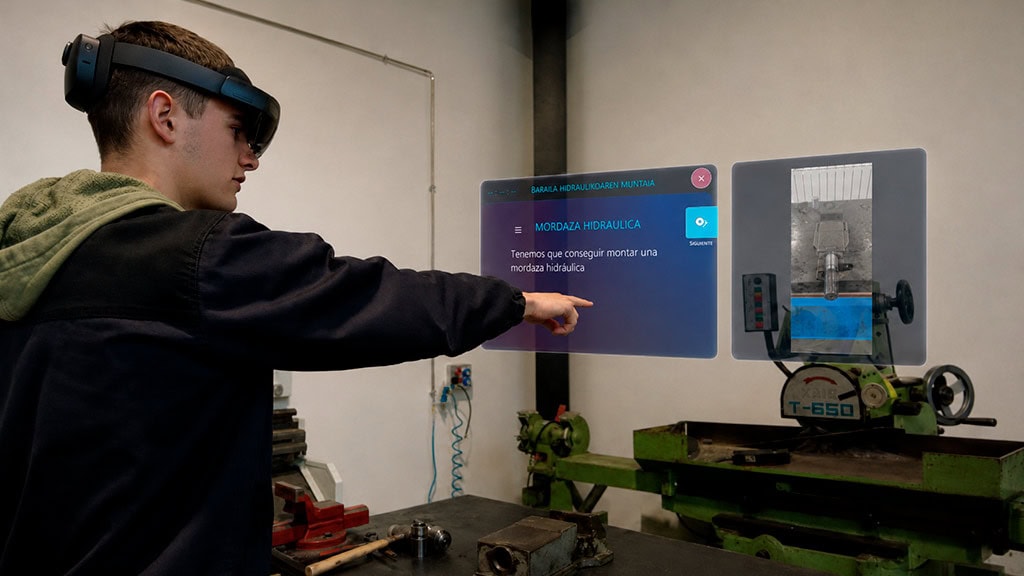
As a result, training becomes more standardised and efficient, reducing errors during practice, improving safety compliance, and enabling better tracking of skills acquisition. It also promotes the correct use of machinery and work environments based on specific tasks, contributing to more competent and prepared professionals.
The future of Vocational Education and Training as a strategic driver of employment
Vocational Education and Training has become a key factor in improving employability and meeting the real needs of industry. Its combination of practical learning, technical specialisation, and close connection with the labour market makes it an increasingly important pathway within today’s education system.
The challenge is no longer proving the value of VET, the data already confirms it. The focus now is on continuing to develop methodologies, technologies, and resources that allow training to be increasingly aligned with real workplace environments. Because the more closely education is connected to professional reality, the better equipped students will be to face the challenges of both today’s and tomorrow’s labour market.