

Virtual Reality
What is Virtual Reality?
Virtual Reality immerses users in a fully computer-generated world, temporarily disconnecting them from the real environment and surrounding them with an alternate reality.
To experience Virtual Reality, users need special headsets. These can be connected to a computer, fully standalone, or designed to hold a smartphone inside.
High-end VR headsets connected to powerful computers provide the best visual quality and most realistic experiences for users exploring virtual environments.

History of Virtual Reality
The story of Virtual Reality dates back to the early 20th century. In 1935, science fiction writer Stanley G. Weinbaum introduced the first reference to VR headsets in his story “Pygmalion’s Spectacles”.
The story featured a teacher’s invention that allowed users to travel to different worlds and places through glasses.
The first VR headset was created in 1960 by Morton Heiling, who is known as the father of virtual reality.
Heilig had previously developed the Sensorama in 1957, a large machine that offered multisensory experiences. His next invention, a head-mounted device called the stereoscopic television apparatus for individual use, marked the beginning of VR as we know it today.
Although primitive by today’s standards, this headset introduced concepts that remain at the core of modern VR technology .
How does Virtual Reality work?
Understanding how Virtual Reality headsets work is fascinating, as they combine multiple technologies into a single device. The display system consists of two screens, each showing a different video sequence to each eye.
When content is specifically designed for VR, stereoscopic vision allows users to perceive it as a three-dimensional, dynamic, and interactive space.
Inertial and positional sensors track user movements, making the virtual environment respond naturally to actions such as walking, turning your head, or moving your hands.
In this way, when we walk, move our head or hands in the real world, we also move in the virtual world.
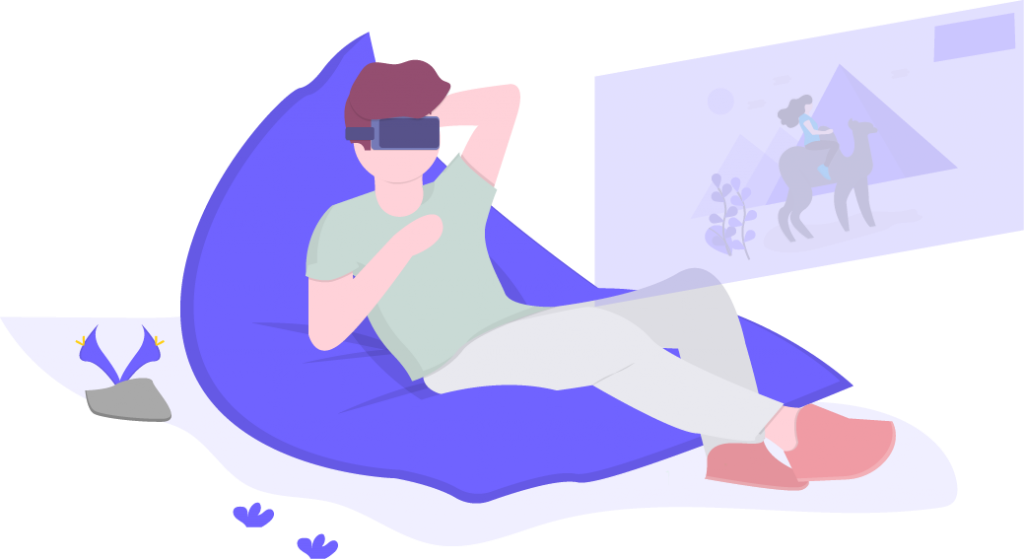

Virtual Reality experiences rely on software that functions much like a video game engine, capable of rendering highly realistic, high-resolution images.
Rendering is the process that transforms a three-dimensional scene, geometry, textures and lighting, into 2D frames.
In Virtual Reality, two frames must be calculated simultaneously, one for each eye, with a minimum resolution of 4K per eye on advanced systems.
For this reason, high-performance graphics cards are essential, as a user-friendly VR experience requires a frame rate of at least 90 frames per second.
We are experts in Virtual Reality. Let us help you!
We offer a range of VR solutions that can be tailored to your projects.
Virtual Reality Headsets
Virtual reality comes in different forms, mainly depending on the type of device you use.
High-end devices

High-end Virtual Reality devices rely on high-performance PCs and advanced headsets, commonly used in enterprise and medicine.
Popular models include HTC VIVE and Oculus Rift, which were pioneers in the VR industry and provide the most immersive virtual reality experiences available.
Mid-range devices
Mid-range Virtual Reality headsets, also known as standalone devices, do not require a PC and are available at more affordable prices.
They offer a realistic VR experience suitable for gaming and social multi-user applications. Leading examples include the Oculus Quest, widely adopted in the entertainment industry.
The Oculus Quest is the most popular model in this category, widely used for gaming and social VR applications.

Mobile VR Devices
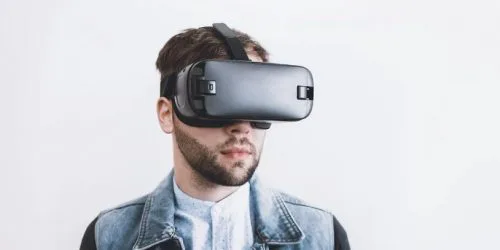
Mobile VR headsets turn smartphones into virtual reality devices. Users place their phone into a plastic or cardboard headset, and the lenses create a split-screen 3D experience while the phone’s sensors track your movements.
These headsets are great for simple VR apps and 360° videos, offering an accessible way to explore virtual reality without expensive equipment.
What are Multi-user Virtual Environments?
Multi-user Virtual Environments are an emerging paradigm in Virtual Reality, shaping the conversation about the future of digital interaction.
They consist of interconnected 3D virtual spaces that allow unlimited interaction through avatars.
More and more companies are investing in this concept, recognizing that it will soon become a global alternative reality.
Companies worldwide are beginning to embrace Multiuser Virtual Environments as a new form of alternative reality. They are changing how teams work, enabling virtual meetings, employee training, and design validation in a fully immersive environment.
.
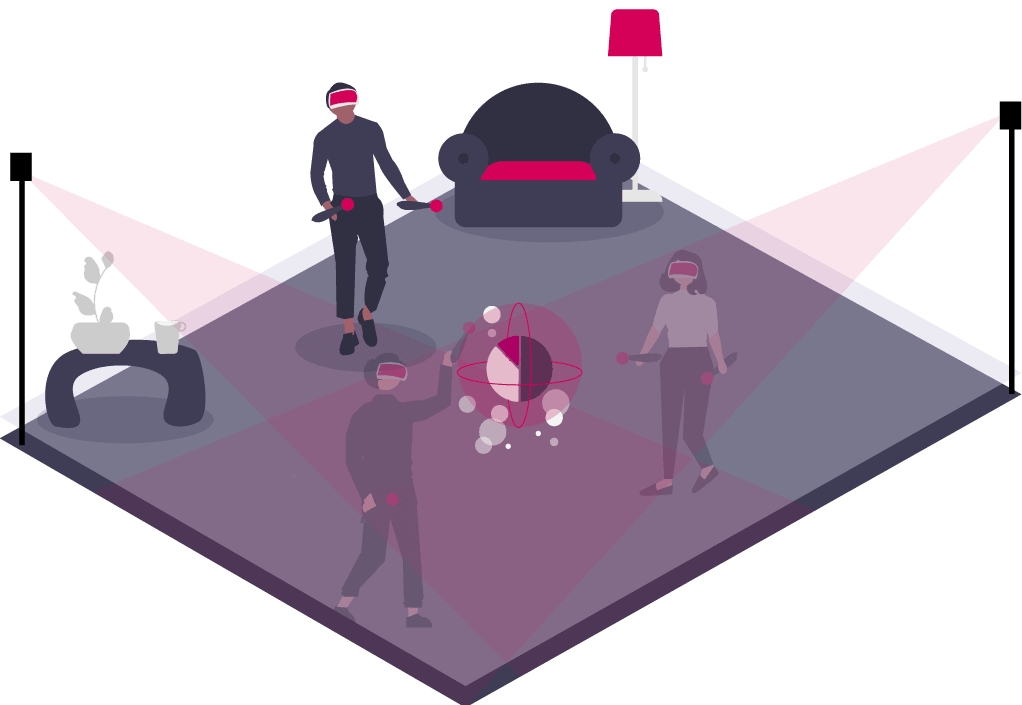
Immersive virtual training rooms
Virtual Reality makes it possible to train teams in multiuser environments using fully immersive rooms.
These are computer-generated spaces where the actions of every connected user affects the experience, allowing users to realistically share the virtual environment.
These immersive rooms are accessible both on-site and remotely, and enable efficient training in collaborative tasks in any sector.

Curious about bringing Virtual Reality to your company?
Discover how our solutions can enhance training, collaboration and innovation.
Differences between Virtual Reality and Augmented Reality
While Virtual Reality and Augmented Reality are often mentioned together, they provide very different experiences.
Virtual reality creates a fully digital environment, an immersive experience in 360 degrees that feels completely real. Users can interact with the virtual world as if they were really there, becoming unaware of their real environment.
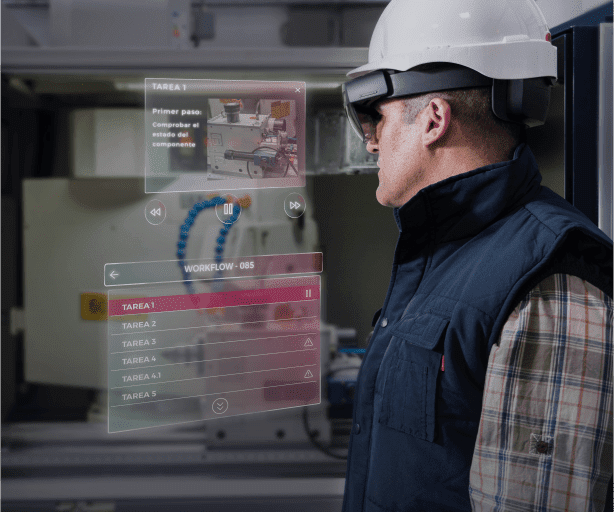
In contrast, AR overlays virtual elements onto the real world, blending digital objects with what you see in reality.

Main benefits of Virtual Reality
Virtual Reality allows us to immerse ourselves in environments and situations that closely resemble real life, helping us gain experiences and knowledge that can later be applied in the real world.
Some of the key benefits of Virtual Reality include:

Efficient, risk-free learning environments suitable for mechanical operations, emergency training and medical practice.

Step into situations firsthand to develop empathy, face fears, and prepare for real-world challenges that might feel overwhelming.

Highly entertaining and immersive, providing powerful experiences in VR games and simulators.

Reduces costs when validating designs or presenting projects, while providing a realistic view of the final result.

Collaborative sessions, where multiple users from different locations can meet to work together in the virtual environment.
As VR reaches maturity, countless companies worldwide are leveraging its advantages to innovate across every sector
We are a company specialised in Virtual Reality. Can we help you?
We have different solutions to adapt them to your projects
Uses and applications of Virtual Reality
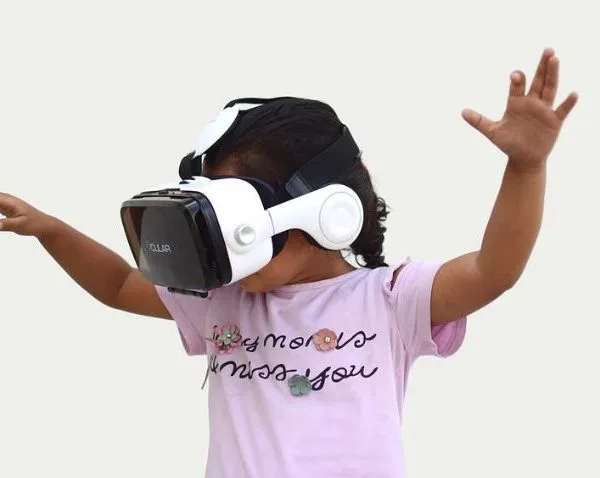
Virtual Reality for Education
Virtual reality in the classroom is set to revolutionize the way children learn.
It has the power to spark students’ creativity and awaken their imagination, helping them grasp complex academic concepts more easily. VR can also enhance cultural and historical understanding by allowing students to “travel” to different parts of the world and even different time periods.
VR can also help students learn important values. By experiencing situations firsthand, students can build empathy and strengthen values such as respect, generosity, humility and tolerance.
Virtual Reality for Industry 4.0
In industrial settings, Virtual Reality is primarily used to train professionals.
It allows employees to practice complex or high-risk tasks before performing them in a real-world environment, improving both safety and cost efficiency.
Technical training usually requires subject matter experts and critical machinery, resources essential for production. Virtual training modules enable autonomous learning without tying up these key resources.
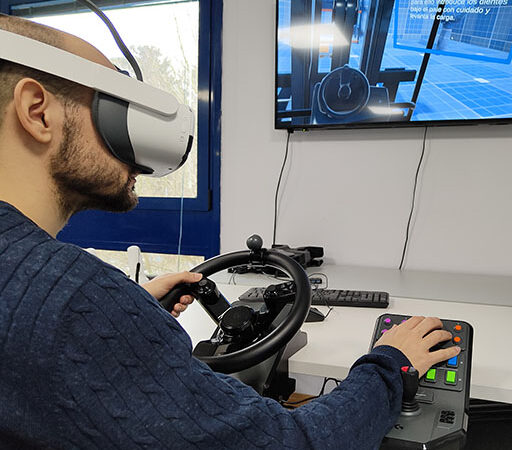
There are studies that have demonstrated the effectiveness of Virtual Reality as a training tool for professionals, and the knowledge that is assimilated with these dynamics is practically equivalent to performing the tasks in a real situation.
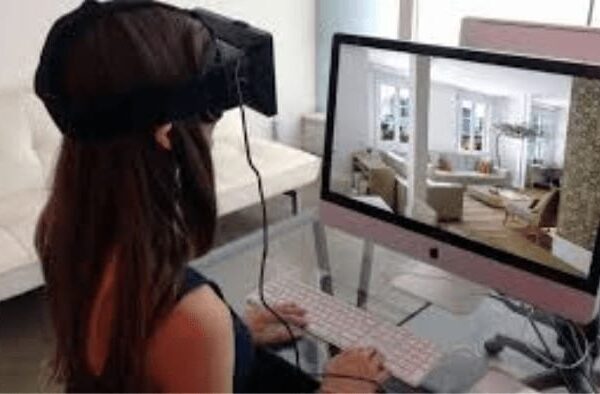
Virtual Reality for architecture and real estate
Virtual Reality gives innovative architects the tools to deliver more value to their clients.
Presenting a project on a blueprint is one thing, immersing clients in a fully interactive 3D environment is another.
Homebuyers can also benefit from an immersive experience. Being able to explore the space and personalize finishes helps them make confident, informed decisions.
Virtual Reality for Medicine
Virtual Reality allows students to explore the human body in entirely new ways.
Certain technical procedures can be difficult to train on, often requiring cadavers or live cells. VR enables detailed, repeatable training scenarios, letting students practice surgical procedures step by step safely and efficiently.
Beyond training, VR also supports patient care, helping reduce stress before procedures, manage pain during interventions and enhance engagement in neurological rehabilitation, accelerating recovery and motivating patients throughout therapy.


Virtual Reality for Psychology
Virtual Reality offers powerful applications for mental health and psychological therapy with proven effectiveness.
VR allows patients to be safely exposed to environments where they face their psychological challenges.
From crowded spaces to heights or stressful situations like flying, Virtual Reality enables controlled exposure therapy that enhances patient outcomes.
Virtual Reality for Marketing
Virtual Reality is transforming marketing strategies. A fully customized virtual showroom allows brands to showcase products in 3D and streamline the sales process.
Consumers can enjoy immersive experiences that focus their attention on promotional messages, creating powerful emotional connections. VR also enables product customization, such as designing cars, enhancing the possibilities beyond traditional retail environments.
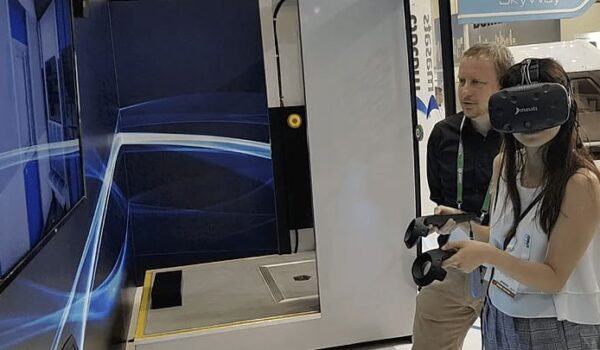
Additionally, brands can conduct experiments in virtual shopping spaces, testing packaging, promotions, or new products to better understand consumer behavior.

Virtual Reality for leisure
Virtual Reality is renowned for delivering thrilling experiences such as riding a roller coaster, allowing users to feel speed and vertigo from the comfort of their own home.
VR gaming is becoming increasingly spectacular. Although VR headsets are not yet as widespread as traditional consoles, AAA VR games are being released every month, offering fully immersive experiences that engage the whole body rather than just handheld controllers.
The tourism industry can also leverage Virtual Reality, allowing potential travelers to virtually visit destinations, explore hotels and preview attractions before making travel decisions.
The future of Virtual Reality
The Virtual Reality industry is expected to experience tremendous growth in the coming years, with many sources projecting annual increases of over 50%.
Just as personal computers and smartphones become household essentials, VR headsets will soon be commonplace in homes worldwide. Advanced services and applications will enhance our interaction with the digital world, transforming everyday life.
VR will expand into unexplored areas such as art, social interaction, virtual travel, and therapeutic applications. This journey of discovery promises to be both exciting and transformative for society and businesses alike. Innovae is at the forefront, shaping the future of Virtual Reality.
Our mission as a virtual reality company
At Innovae, we specialize in applying Virtual Reality to professional environments, leveraging our team’s extensive experience in developing customized applications. We tailor solutions to each company’s specific needs, improving the efficiency of training and operational processes.
If you are considering using virtual reality to transform your organization, concat us today.