

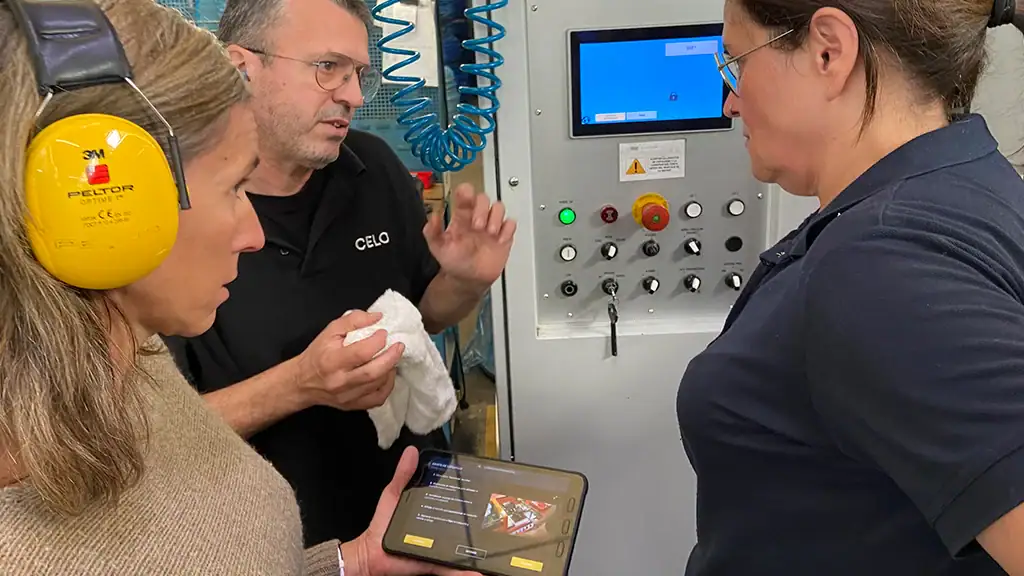
With operations across Europe, Asia and America, CELO is a global leader in the design and manufacture of high-precision fastening and screw solutions for the industrial and construction sectors.
As part of its commitment to digitalisation and operational excellence, the company has implemented SAAM, our solution for the digitalisation of technical operations, at its plant in Castellar del Vallès (Barcelona).
The project, initially focused on digitising model change processes, and quickly delivered outstanding results. Its success led CELO to roll out the solutions across its entire industrial network. The goal: to standardise procedures, safeguard critical knowledge and accelerate the training of new operators in a multilingual and global environment.
We spoke with Teresa Pons, head of operations, and Javier Escánez Ortega, technician trainee and head of process digitisation, to learn first-hand how SAAM has contributed to this transformation.

Teresa, what needs led you to look for a tool to digitise the model change processes on your production machines?
We needed to standardise our work operations. Despite having written work instructions, these were not intuitive enough for operators and didn´t fully cover all the knowledge needed for effective problem solving.
Did operating in multiple locations make standardizing processes a bigger priority?
Absolutely. Even though the production process was the same across all plants, each site had its own way of working, which caused inefficiencies and inconsistent results.
On top of that, we were undergoing a generational change in our teams, opening new factories abroad, and dealing with high turnover, which made us realize that we needed robust tools to share knowledge across all employees.
Did you know from the start what kind of solution you were looking for?
We knew we needed an interactive platform that would support the initial training of operators, shorten the time needed for them to work autonomously, and provide enough operational knowledge to standardise working methods. SAAM delivered all of this with its AR capabilities, traceability, and knowledge management, making it far more advanced than other solutions we evaluated.
What results have you achieved since implementing SAAM? Have your expectations been met?
At a business level, the implementation of SAAM has allowed us to significantly reduce the time needed to achieve autonomy in preparation or model change, from months to just days. We have also standardised operations between the different production plants. These improvements give us the confidence to tackle the upcoming generational change that will shape the organization over the next three to five years.
And what impact have you seen at the operational level, among workers?
Operators agree that SAAM makes their day-to-day work much easier. It simplifies their work by guiding them step by step with clear visual instructions for assembly and quality control, eliminating the need to consult manuals.
This empowers workers to operate more independently, reduces errors, and helps them work more efficiently and safely, with immediate access to expert knowledge whenever they need it.
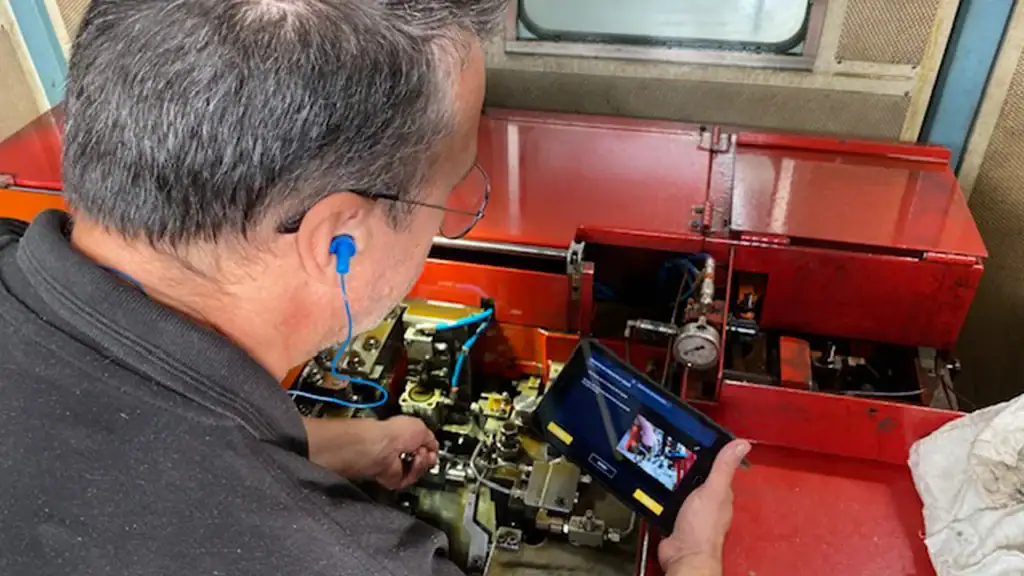
Javier, you were in charge of one of the most critical parts of the project: digitising the processes. How was that experience?
First, Innovae provided us with training that helped us understand how SAAM works and how to apply it to our project. We then recorded most of the key operations involved in the processes to be digitized, which allowed us to gain a deep understanding of each step.
Once we had a clear understanding of the entire process and its different steps, we digitised it, incorporating explanatory texts, images and short videos for each operational task. We then tested this first version on site to validate it.
Based on the insights gained during testing, several iterations were carried out to introduce improvements until the process was fully validated.

What is your opinion of the SAAM Administration Panel for digitising the knowledge acquired about the procedure?
When it comes to creating tasks and procedures in the administration panel, I found it a bit complicated at first due to the wide range of options available. However, once you understand how it works, the digitisation process is very simple.
I would say that anyone can do it, even without prior programming knowledge. If you have some experience in this area, you will find it quicker and easier, but the tool is intuitive enough that someone without technical knowledge can use it.
The CELO case clearly demonstrates how the digitisation of processes with SAAM not only improves operational efficiency, but also ensures the safeguarding and transmission of technical knowledge within organisations.
With this initiative, the company has managed to standardise procedures, reduce learning times and provide operators with intuitive and visual tools that improve the quality of their daily work.