

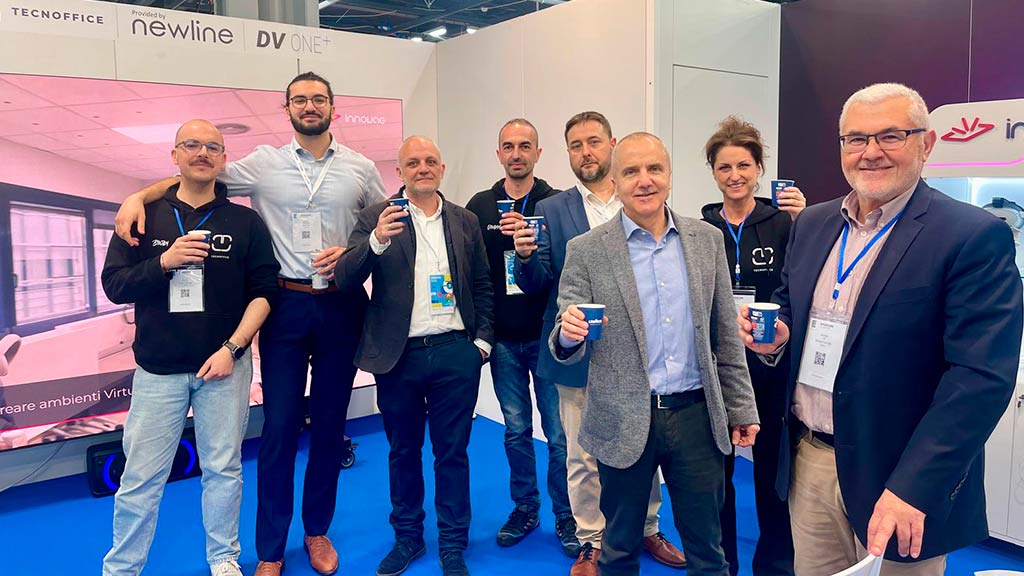
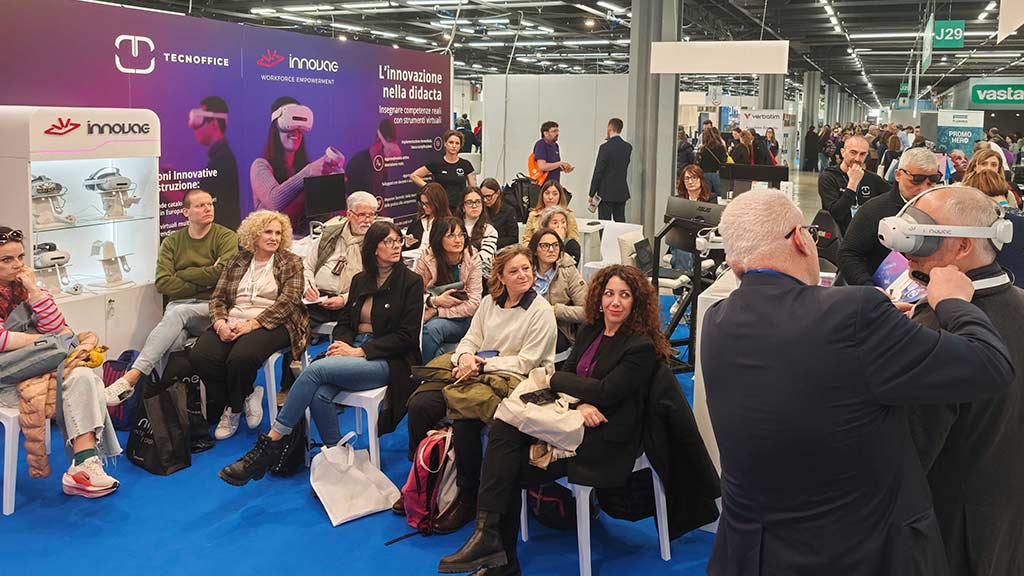
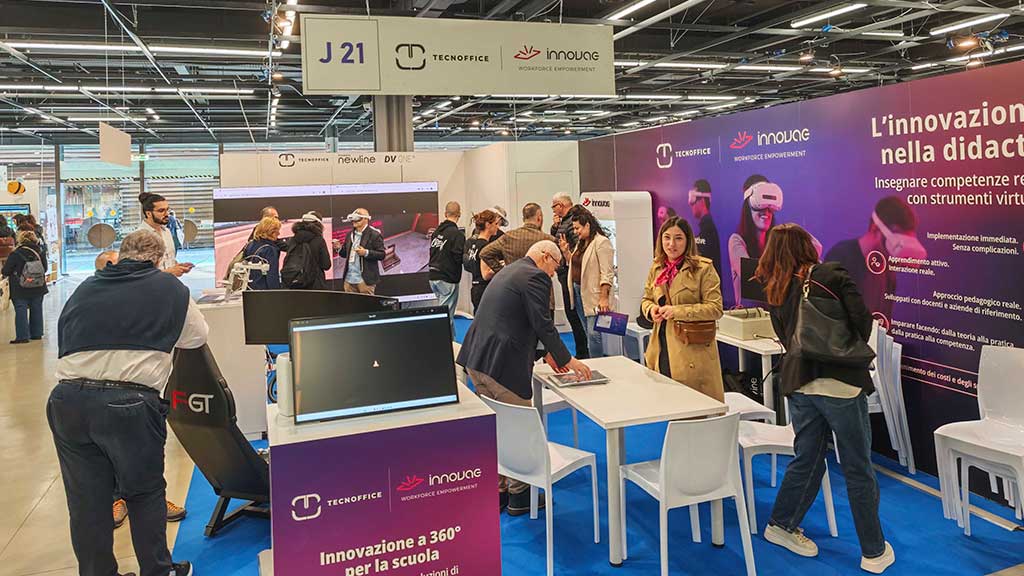
Last week we participated in a latest edition of Didacta Italia, the country’s leading trade fair for educational innovation, held in Florence and bringing together thousands of teachers, school administrators, institutions and technology companies.
Following our participation last year in Didacta Trentino, we returned to this important event alongside our Italian distributor, Tecnoffice SRL, to showcase how virtual reality and augmented reality can be effectively integrated into innovation labs in schools and educational centres.
In addition, our solutions were also present at the stand of Ligra DS, another of our official distributors in the country.
Virtual Reality Simulators for Vocational Education and Training
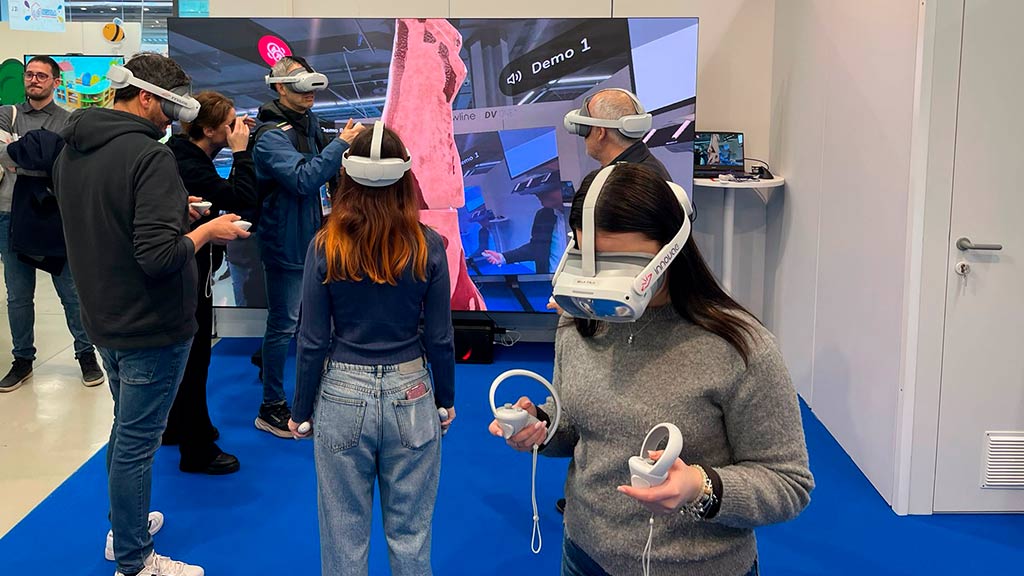
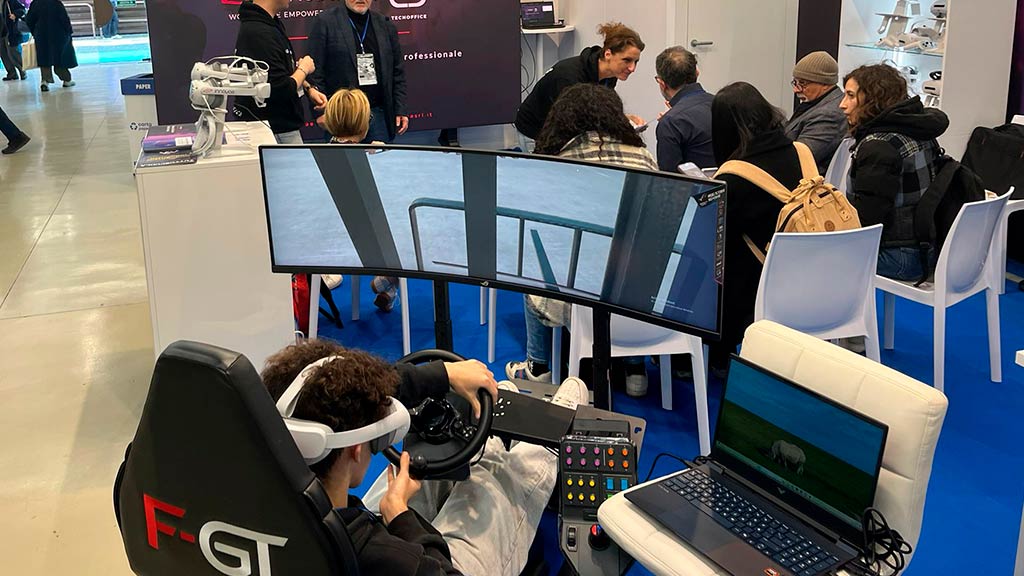
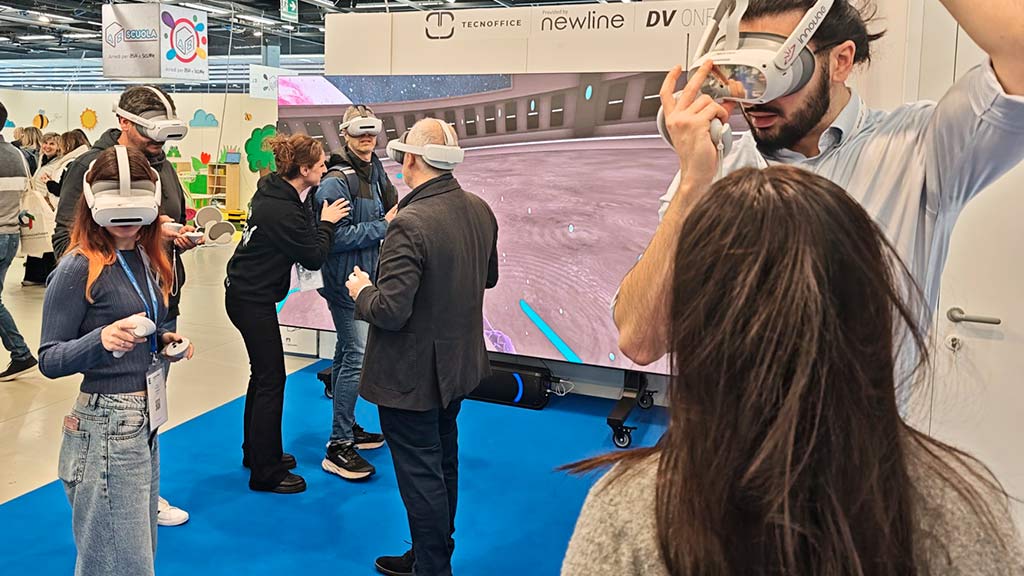
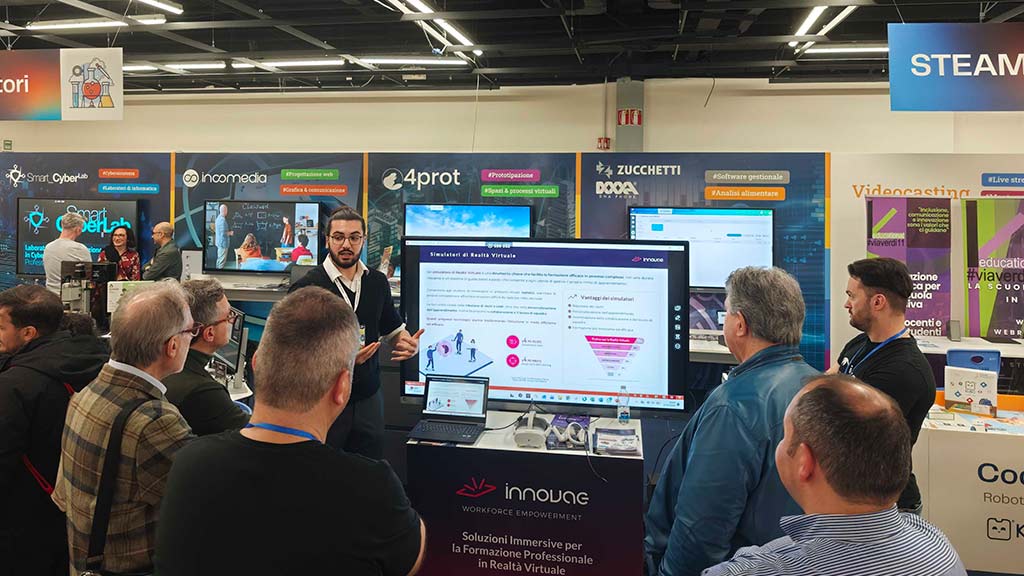
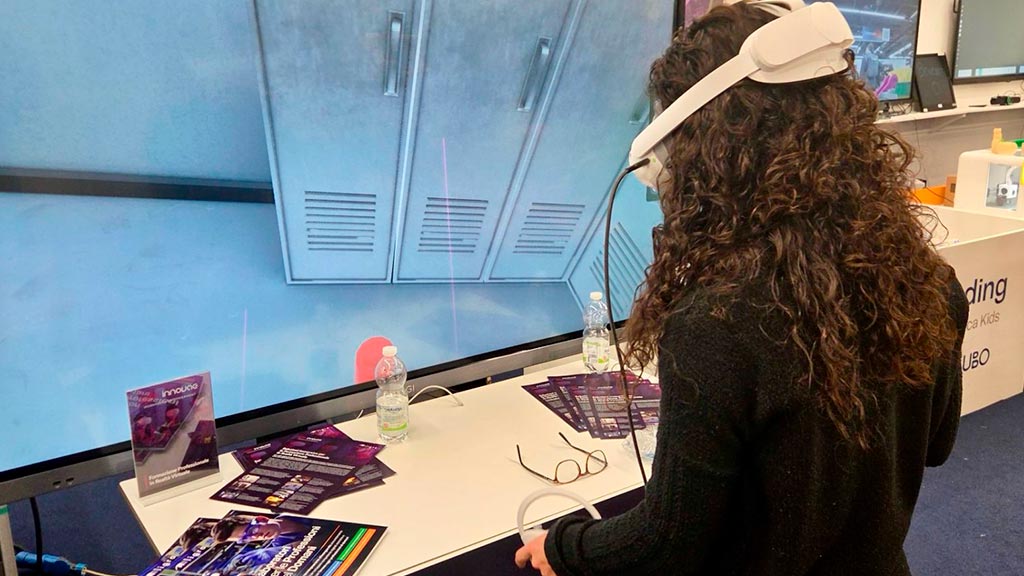
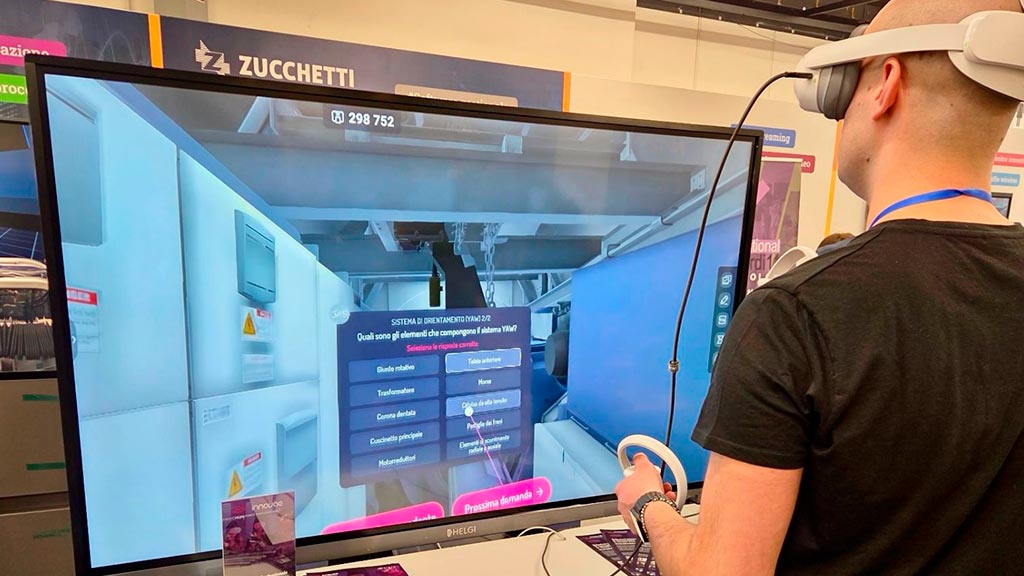
During the three days of the fair, we showcased our extensive catalogue of virtual reality simulators, the largest in Europe, featuring over 60 ready-to-use simulators developed in collaboration with teachers and companies across different sectors.
These solutions recreate real work environments allowing students to practice technical procedures in conditions very similar to those in the professional world, but without physical risks and with full pedagogical control.
Through interactive simulations, students can repeat tasks, tackle complex scenarios and progressively build practical skills. This approach supports competency-based training programs, enabling learners to acquire real-world competencies through hands-on experience rather than purely theoretical instruction.
Managing and enhancing VR training programmes
Alongside our virtual reality simulators, we also showcased solutions that complete our ecosystem for immersive learning, helping schools and training centres manage and deliver more interactive, structured educational experiences.
This includes SAVI, our platform for comprehensive management of virtual reality training programs. With a single interface, SAVI allows administrators to manage users, organize training paths, and track results making it easier for teachers to monitor student progress and plan learning activities effectively.
We also presented ERAVIS, a collaborative tool for multi-user virtual environments. ERAVIS enables teachers and students to interact in real time, share content, and participate in interactive simulations, even when located in different places.
Finally, SAAM supports the digitization of technical procedures. It transforms expert knowledge into step-by-step digital workflows, standardizing training processes and giving students the chance to learn independently through guided practice.
The perfect solutions for innovation labs
Our solutions are designed to integrate seamlessly into innovation laboratories in Italian centres.
In these classrooms, extended reality technologies enhance traditional equipment, offering practical experiences that would be difficult, expensive or even dangerous to replicate in a conventional classroom.
By incorporating these tools, schools can expand the variety of training scenarios available to students, supporting more active and immersive learning that aligns with the real demands of the labour market.
Moreover, our solutions align with the modernisation processes of the italian education system, supported by public funding programmes such as PNRR, POC and PN. as they allow for the introduction of advanced practical training across multiple technical specialities without the need for complex infrastructure.
A meeting place with the Italian educational ecosystem
Didacta Italia continues to consolidate its position as one of the main meeting points for the European education community. For us, participating in this event is a valuable opportunity to connect with teachers, institutional leaders and educational centres, exchange ideas and explore new ways of integrating immersive technologies into technical training.
The strong interest our solutions received during the fair reinforces our commitment to supporting educational innovation through extended reality and to continuing to collaborate with the Italian education system in its digital transformation.